

Key Points:
- Common barriers in aging parents’ homes include front entrance steps, door thresholds, overlooked side entrances, narrow hallways and indoor obstacles, and disconnected outdoor spaces that can significantly impact daily life and independence.
- ARAS offers three types of ramps for elderly residents: modular systems for flexible, adjustable solutions; custom ramps for complex spaces; and flatpack ramps for straightforward, quick installations.
- Ramp costs vary based on materials, height and gradient requirements, design complexity, safety features, site access, and installation labour, with detailed quotes needed for accurate pricing.
- NDIS funding is available for home modifications including ramps, provided your parent owns the home or has landlord approval, and meets eligibility criteria such as safety concerns or difficulty accessing rooms.
Summary:
As aging parents face new mobility challenges, common problem areas in the home, such as the front entrances and outdoor spaces, become increasingly difficult and even dangerous to navigate. ARAS offers three main types of ramps for the elderly: modular, custom, and flatpack systems, each designed to suit different spaces and budgets. Understanding the factors that drive ramp costs and exploring NDIS funding options for home modifications can help families make informed decisions about accessibility solutions.
Outline:
- Where a Home Quietly Stops Working for Aging Parents
- Which Type of Ramp Fits Which Situation
- What Factors Drive the Cost of a Disability Ramp
- Is Ramp Funding Available? What We Can Tell You About the NDIS
- Navigate Your Home Safely with Ramps from ARAS
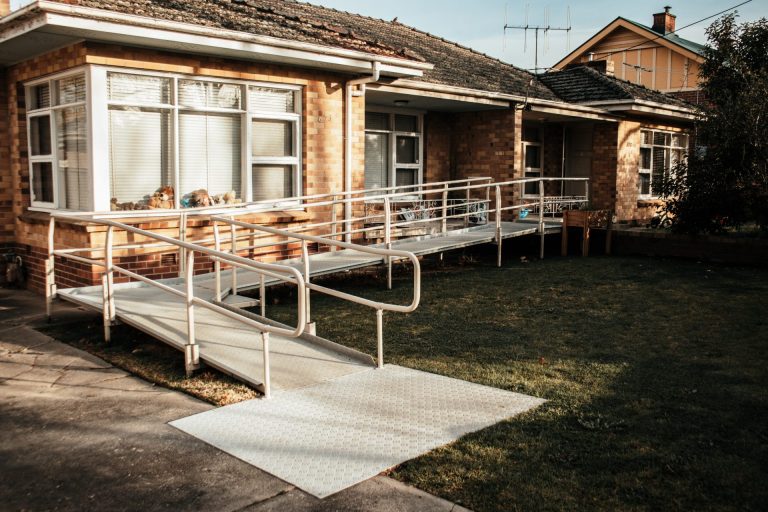
Your parent’s home should be a place of safety and comfort, but as we age, the spaces we’ve loved for years can become harder to navigate because steps that never seemed steep before start to feel daunting, doorways feel narrower, and uneven surfaces catch our feet in ways they never did.
The good news is that the right access ramps for the elderly can transform these challenges by offering a practical solution that restores independence, reduces fall risk, and helps your parent stay in the home they know and love, especially if your parent is recovering from an injury, managing a chronic condition, or simply finding mobility harder.
At ARAS, we’ve spent over 25 years helping Australian families make their homes safer and more accessible, and we’re here to guide you through every step of this journey.
Where a Home Quietly Stops Working for Aging Parents
Your parent’s home might not feel unsafe at first glance, but the changes happen so slowly that families often don’t notice them until they become real problems. Understanding these problem areas is the first step toward creating real solutions.
The Front Entrance
The front entrance is where access problems often begin, and many Australian homes have steps leading to the front door, steep pathways, uneven paving, or tight landing spaces that don’t provide enough room to turn safely. When it rains, smooth tiles become slippery, and someone using a wheelchair may need help every time they leave or come home.
Even simple tasks like carrying groceries while using a walking aid become genuinely stressful. The right ramp with rails for the elderly can be a portable ramp, modular system, custom threshold ramp, or safer pathway with extra support, depending on the step height, available space, and mobility equipment your parent uses.
Door Thresholds
Door thresholds are one of the most dangerous barriers in a home because a raised edge of just a few centimetres can catch a wheelchair wheel or trip someone with weaker legs. Some families try temporary wooden ramps or improvised solutions when faced with this problem, but these can shift, bend, or create an unsafe slope that is actually riskier than the original threshold.
A purpose-built threshold ramp is much safer and more stable, with rubber, aluminium, or custom-made options working well depending on your doorway.
Interior Spaces
Bathrooms get a lot of attention when families think about accessibility, and they should, because wet floors, tight spaces, and hard surfaces do create real risks. However, access problems in the home often start before your parent even reaches the bathroom because narrow hallways, loose rugs, sharp turns, and changes in floor height make it hard to move safely through a home.
Furniture can reduce the turning space needed for a wheelchair or walking frame, thick carpet makes mobility devices harder to push, and bedrooms with limited space beside the bed become genuinely difficult to navigate.
Kitchens with narrow entry points or out-of-reach storage can cause problems too, which is why the best disability ramps for homes think about your parent’s entire journey through the home rather than focusing on one room in isolation because improving one area while leaving the route to it unchanged simply won’t solve the real access problems your parent faces.
Outdoor Spaces
A backyard, patio, garden, or deck is often an important part of family life and brings genuine joy and connection, but these spaces can quickly become unreachable when there are steps, raised edges, or uneven surfaces in the way.
Your parent might stop going outside because the doorway feels unsafe. This change can happen so quietly that family members think your parent has simply lost interest in being outdoors when the real reason is that access has become stressful and risky.
The right ramp or level transition can reconnect your parent with outdoor spaces and support fresh air, gardening, social time, and all the activities that make home life rich and enjoyable.
Which Type of Ramp Fits Which Situation
There isn’t one perfect ramp for every home because the right solution depends on your space, your timeline, and your budget. Let’s look at the three main types of ramps that ARAS offers so you can understand which might work best for your parent’s situation.
Modular Ramps
A modular ramp is built from pre-engineered parts that work together as a system, with each section connecting to the next to create a flexible solution. These are ideal when you want a reliable, quick installation that can be adjusted over time as your parent’s needs change.
They can be expanded, relocated, or reconfigured depending on your circumstances, which makes them perfect for both temporary and permanent applications. If your parent’s situation might shift in the coming months or years, a modular system gives you the flexibility and options you need.
Custom Ramps
Custom ramps are designed for complex spaces, tight corners, or unique structural challenges where standard solutions simply won’t work. They’re built to exact measurements and slope requirements that match your specific situation perfectly.
If a standard or modular system won’t fit your space, a custom ramp is the answer because each one is engineered to suit your site precisely. It meets all relevant safety standards while working with your home’s exact dimensions and environment.
Flatpack Ramps
A flatpack ramp arrives as a kit with all the parts you need, and it’s designed for straightforward access needs that don’t require complex customisation. The Nexus Flatpack is a good example of this type of system, featuring frames that lock together to create a strong, solid base that’s simple to assemble and certify.
It’s tough enough for domestic, commercial, and industrial settings, and you can choose different flooring options like Modwood, concrete fibre composite, or fibre-reinforced polymer to match your home’s style and safety needs.
If you’re upgrading a residential entry, fitting out a commercial space, or improving access across an industrial site, a flatpack system delivers a reliable, compliant solution built to last.
What Factors Drive the Cost of a Disability Ramp
Understanding what affects ramp pricing helps you make an informed decision. That’s because there’s no one-size-fits-all cost when so many factors influence the final price. Below are the key elements that impact what you’ll invest in your parent’s accessibility solution.
Materials Used
Different materials cost different amounts, and the choice often depends on where your ramp will be located and how much use it will get. Timber is often the most affordable starting point, modular aluminium systems cost more, and steel and permanent concrete structures cost more again.
Premium materials like heavy-duty fibre-reinforced polymer add extra expense, especially in wet areas where slip resistance is absolutely critical for your parent’s safety.
Height, Length, and Gradient
The higher your parent needs to climb, the longer your ramp must be, because Australian Standards (AS 1428.1) set safe gradient limits that protect users. A steeper rise means a longer ramp, which means more materials and more labour is required to do the job properly.
Height exponentially increases both material and installation costs, so even a small increase in the step height can significantly impact your final price.
Design Complexity
A simple threshold ramp is straightforward and affordable, but if your space is tight or your ramp needs turning platforms or switchbacks to navigate corners, the design becomes more complex.
Complex designs demand more engineering work and more physical space, which is reflected in the final cost.
Safety and Compliance Features
Adding handrails, edge protection, and non-slip surfaces increases cost, but these features are essential for your parent’s safety and are often required to meet Australian Standards. This is money well spent on features that genuinely protect your parent’s wellbeing.
Site Access and Installation
Difficult terrain or restricted ground access makes installation harder and takes more time, and local council permits and approvals for permanent structures add to the final bill.
Some sites require more preparation work than others, so a professional assessment is really valuable in understanding what your specific situation will require.
Installation Labour
A prefabricated modular kit might install in just a few hours, while a custom timber or concrete ramp takes days of professional labour. The more time required, the higher the labour cost, so choosing the right ramp type for your situation is important from a budget perspective.
Every home is different, and the best way to understand your costs is to have a professional assess your space and provide a detailed quote that covers everything you need.
Is Ramp Funding Available? What We Can Tell You About the NDIS
If your parent has a disability and receives NDIS support, ramp installation for seniors and home modifications may be funded through their plan.
This can be done through home modification funding under Capital Supports. Home modifications are changes made to a home to help someone manage their disability,
Who Can Access This Funding
NDIS funding can only pay for modifications to a home your parent owns or where the owner agrees to the modifications being made. If your parent rents, they’ll need to speak with their landlord about installing a ramp and confirm that the landlord will permit the change.
When Your Parent Might Qualify
Your parent might be a good candidate for ramp funding if they experience any of the following situations:
- They need changes so their carers can support them safely.
- They have safety concerns or struggle to move around their home
- They have trouble entering or leaving their home
- They can’t access the rooms they need to use every day
- They’re working towards goals in their home but their disability makes these difficult to achieve
Navigate Your Home Safely with Ramps from ARAS
We know that choosing the right ramp is a big decision for your family, so we’re here to make the process easier. At ARAS, we’ve spent over 25 years helping Australian families and organisations make their homes and spaces more accessible while bringing real expertise to every project we take on.
We deliver fully compliant wheelchair ramps for homes and custom modular solutions that work for your specific situation. We manage everything for you, from DDA risk assessments and engineering through to certified installation and long-term support. You don’t have to juggle multiple suppliers or worry about your ramp meeting safety standards, because we handle it all and take the stress out of the process.
We’re trusted by federal and state governments, major infrastructure contractors, and key public sector departments across Australia, which means we bring proven expertise to projects of every size and complexity. Our team provides genuine, reliable advice on DDA requirements, Australian Standards, and Building Code compliance, so you can feel confident that your ramp solution is built right, compliant, and backed for the long term.
Your parent deserves a home that feels safe and welcoming. Let’s make that happen together. Contact ARAS today for a free quote and discover how the right ramp can transform your parent’s independence and quality of life.
This article is intended for general information and educational purposes only. It is based on information available at the time of publication and may not reflect subsequent changes to the Disability Discrimination Act, Australian Standards, building codes, or related legislation. Nothing contained in this article should be taken as professional, legal, engineering, or technical advice, and it should not be relied upon as the basis for any decision or action. ARAS makes no representations or warranties as to the completeness, accuracy, or suitability of the information for any particular purpose. To the extent permitted by law, ARAS excludes all liability for any loss or damage arising directly or indirectly from the use of, or reliance on, the content of this article.